Honoring the visionaries who shaped modern art
Welcome to our dedicated tributes space at ART FEVER. Here, we reflect upon the extraordinary lives, monumental milestones, and lasting legacies of celebrated 20th-century visual artists who recently departed. Explore their groundbreaking masterpieces, re-experience the astonishment their bold visions sparked across the globe, and find inspiration to visit upcoming retrospectives celebrating their genius.

Milestones that transformed visual history
The late icons of the 20th century challenged conventions and expanded the boundaries of canvas, color, and concept. We chronicle each artist's defining breakthroughs, from revolutionary brushwork to philosophical shifts that altered how the world perceives visual art. Delve into the pivotal moments that elevated their work from contemporary studios to the permanent collections of the world's most prestigious museums.
Emotions through immortal masterpieces
Great art evokes awe that outlives its creators. In this series of retrospectives, we examine signature works that continue to evoke powerful emotions, wonder, and critical dialogue. Through detailed essays and aesthetic reviews, we celebrate how these painters captured human vulnerability, societal change, and profound beauty throughout their dynamic careers.
Experience their works
The finest tribute to an artist is to stand before their original creations. We invite you to continue exploring their profound influence by visiting museum shows, traveling retrospectives, and global galleries. Read more artist profiles across ART FEVER, and celebrate the timeless genius that forever reshaped our artistic landscape.

Lucien SMITH (15/04/1989-07/09/2026)
Lucien SMITH was widely defined as an art-world "rebel" and "wunderkind" who rocketed to overnight fame, only to dramatically walk away from the commercial art market at the height of his financial success.
- The "Golden Ticket" Breakout: After graduating from the Cooper Union School of Art in 2011, his show "Imagined Nostalgia" caught the immediate eye of major New York art dealers. The exhibition explored how human imagination distorts the past over time, creating false memories of events we never actually lived through. Smith described the collection as an attempt to "create objects from a childhood that I never experienced firsthand." It captured a very specific American impulse: A deep, sentimental longing for the ephemera, pop culture, and social dynamics of previous generations. The exhibition pulled imagery from old novels, comic books, films, and pop culture that Smith had consumed growing up. The centerpiece of Smith's contribution was a gargantuan landscape painting depicting the iconic tree from Winnie-the-Pooh. Crucially, Smith erased all of the cartoon characters from the scene. Leaving the setting completely empty evoked a haunting, melancholic feeling of a misplaced childhood
- The Fire Extinguisher Technique: He became world-famous for his signature Rain Paintings, large abstract canvases created by spraying diluted acrylic paint out of high-pressure fire extinguishers.
- Market Speculation: At just 24 years old, one of his $10,000 paintings resold for an astonishing $389,000. He quickly became a multi-million dollar "market star".
- The Backlash: Critics labeled his highly speculative, rapidly resold abstract style as the poster child for "Zombie Formalism"—a movement criticized for being driven by quick financial flipping rather than artistic depth.
The Rebel Pivot to Community Art
Disillusioned by what he called a "pretentious" and "unhealthy" commercial gallery system that treated art purely like money, Smith staged an intentional retreat in 2015. He left Manhattan, moved to Montauk, and pivoted entirely toward community-centered projects:
- Serving the People (STP): In 2016, he founded this nonprofit digital platform to support, fund, and empower young, emerging, and unsigned artists who lacked gallery representation.
- Relaunching FOOD: In 2025, he revived FOOD, the iconic 1970s SoHo artist-run restaurant originally founded by Gordon Matta-Clark. He ran the Chinatown eatery as a form of living, breathing social sculpture.
- The Full Circle: Shortly before his death in August 2026, Smith returned to painting on his own terms, utilizing his original fire-extinguisher rain technique to create a final, uncompromised body of work titled Delay of Game.


Winnie-the-Pooh

Flood painting

My river runs to Thee

Narcissus garden 1966

Infinity mirror room 1965
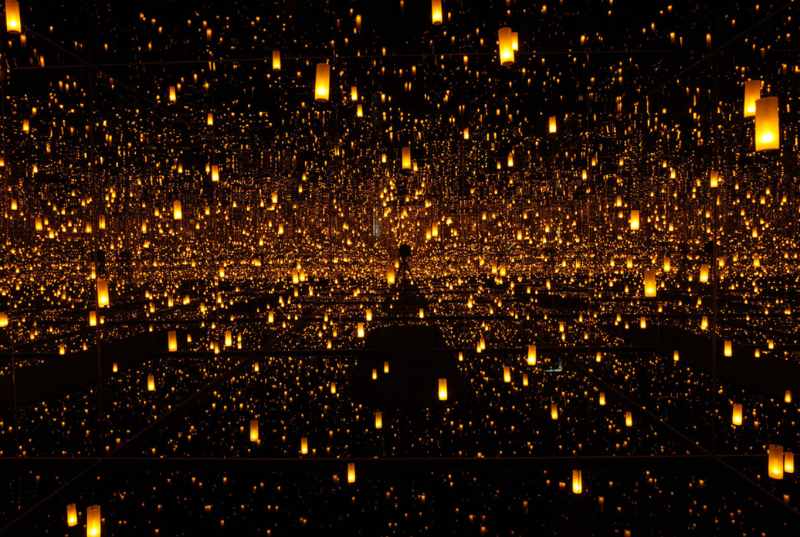
Infinity room LA 2013
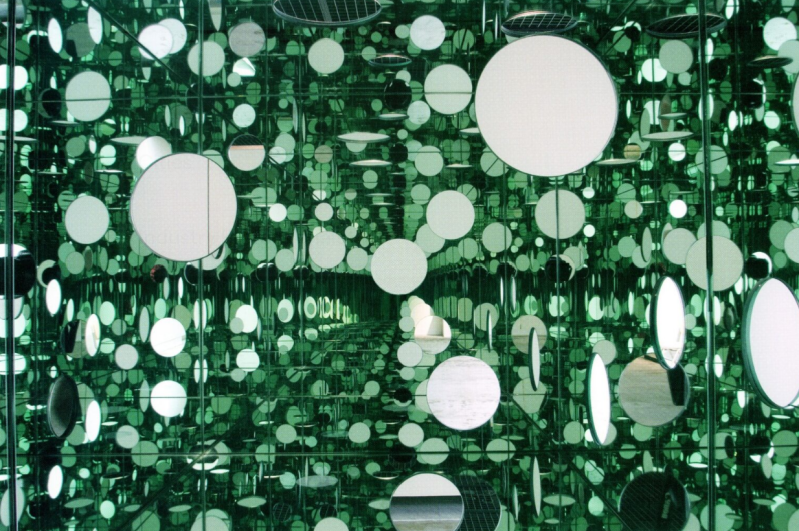
The passing of winter 2005

The flower that bloomed my heart 2011
Yayoi KUSAMA (22/03/1929-14/08/2026)
Following her passing on August 14, 2026, at the age of 97, we mourn and celebrate Yayoi Kusama, the legendary "Queen of Polka Dots". A visionary who transformed her lifelong psychological vulnerabilities and intense hallucinations into a universally recognized visual language, Kusama leaves behind an indelible mark on contemporary art.
The Universe of Self-Obliteration:
For Kusama, repetition was a tool for survival. Facing vivid hallucinations since childhood, she chose to confront the patterns that overwhelmed her by painting them over and over until she felt herself dissolve into her surroundings—a philosophy she famously termed "self-obliteration." Her signature motifs became symbols of cosmic connection rather than isolation:
- The Polka Dot: A single dot, in Kusama’s eyes, represented a life lost among thousands of others, yet seamlessly bound to the entire universe.
- Infinity Nets: Delicate, hypnotic monochromatic mesh patterns that expanded across massive canvases, dismantling traditional artistic structures.
- The Joyful Pumpkin: To Kusama, pumpkins represented a humorous, warm, and sturdy form of comfort, becoming one of her most beloved global symbols.
Crashing Boundaries and expanding space:
Kusama’s radical avant-garde spirit refused to be contained by a conservative, male-dominated art world. - Venice Biennale (1966): She staged an uninvited exhibition of Narcissus Garden, placing 1,500 mirrored spheres outside the pavilion and selling them for $2 each under a sign reading "Your Narcissism For Sale.
- New York Happenings: Throughout the late 1960s, she staged raw, political body-painting performances at the Museum of Modern Art (MoMA) and the New York Stock Exchange to protest war and challenge institutional rigidity.
- The Infinity Mirror Rooms: Her crowning experiential legacy, these rooms used mirrors, lights, and custom structures to create endless fields of view, captivating millions of museumgoers worldwide and becoming historic architectural sensations.
An Eternal Legacy:
Returning to Japan in 1973, Kusama voluntarily checked herself into a Tokyo psychiatric facility, where she lived and maintained a studio right across the street for decades. She painted with astonishing energy into her final days, refusing to ever set aside her brush. From major permanent installations at places like Naoshima Island and Grand Central Terminal to record-breaking museum retrospectives, she proved that an artist's deepest wounds can become a source of universal healing.


Mr. and Mrs. Clark and Percy 1971

My Parents 1977

Pool with 2 figures 1972
David HOCKNEY (09/07/1936-14/07/2026)
David Hockney stands as one of the most vibrant, influential, and relentlessly inventive figures in modern art. Across more than six decades of work, he has transformed how we see light, perspective, and color, effortlessly bridging the gap between traditional draftsmanship and cutting-edge technology.
-
Master of Color & Light: From the sun-drenched, iconic swimming pools of 1960s Southern California to the serene, lush landscapes of Yorkshire and Normandy, his bold palette defined Pop Art and captured the essence of modern leisure and reflection.
-
Redefining Perspective: Through his pioneering "joiners"—photo collages assembled from dozens of Polaroid and 35mm photos—and his massive multi-canvas landscapes, Hockney continuously challenged single-point perspective, offering a human way of seeing that reflects time, motion, and memory.
-
Technological Pioneer: Refusing to be bound by traditional mediums, Hockney enthusiastically embraced new tools throughout his career, famously painting complex, vibrant compositions on iPhones and iPads that showcased his enduring curiosity and youthful adaptability.
-
Portraitist of Connection: His intimate portraits of friends, lovers, and lovers' spaces reveal a deep visual empathy, capturing quiet moments of human relationship with striking simplicity and psychological depth.
Hockney’s enduring legacy is rooted in his unyielding joy of creation and his ability to remind us that art is, above all, about the pleasure of looking closely at the world.

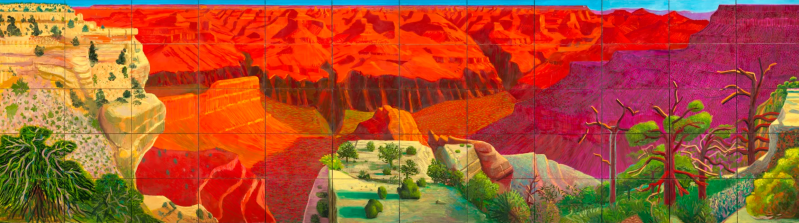
A bigger Grand Canyon 1998
Georg BASELITZ (23/01/1938-30/04/2026)
The art world remembers Georg Baselitz, the monumental German Neo-Expressionist painter and sculptor.
Renowned for his lifelong commitment to rule-breaking and defiance of both political and aesthetic expectations, Baselitz leaves behind a sprawling, seven-decade career that permanently altered the trajectory of post-war contemporary art.
Born Hans-Georg Kern in Saxony, he adopted his artistic surname as a tribute to his birthplace, Deutschbaselitz, asserting an identity tightly bound to Germany's turbulent history.
Baselitz first fractured the art establishment in the 1960s with raw, provocative works like Die Grosse Nacht im Eimer (Big Night Down the Drain), which challenged societal boundaries and faced censorship for its "pornographic" and confrontational nature. Seeking a path between the restrictive social realism of East Germany and the commercial abstraction of the West, he pioneered his trademark upside-down paintings in 1969. By intentionally inverting his figurative subjects, Baselitz successfully emptied them of narrative or political sentiment, forcing the viewer to confront the pure composition, texture, and physical power of paint itself.
His legacy is immortalized across major global retrospectives and monumental wood sculptures aggressively carved with chainsaws and axes. He is celebrated today not just for turning canvases upside down, but for confronting the historical gravity and brutality of the 20th century with uncompromising creative freedom.
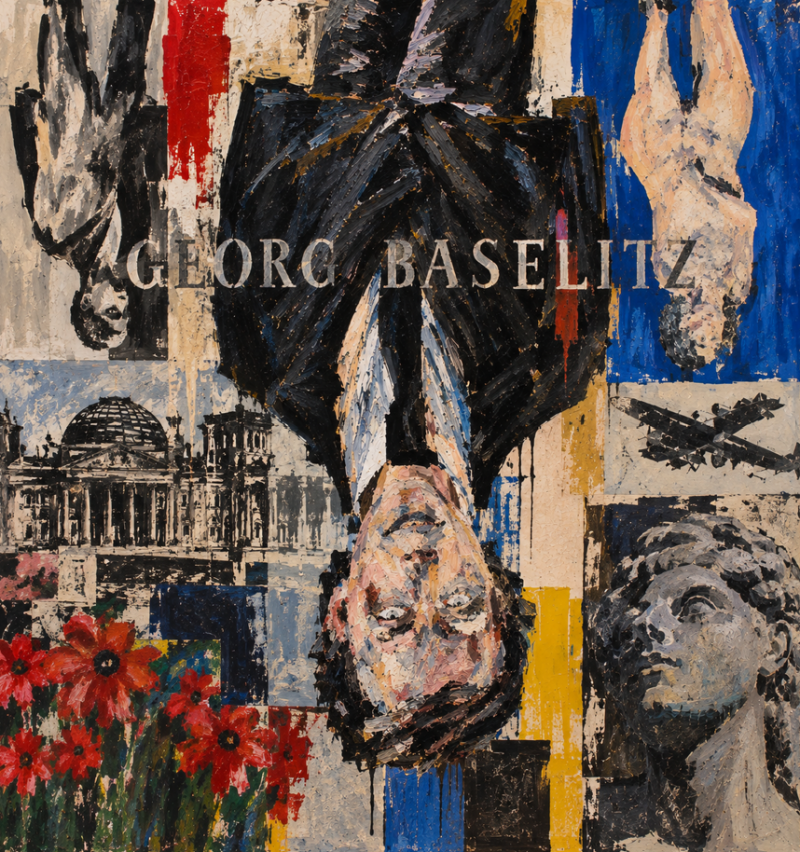

Falle 1966

Die grosse Nacht im Eimer 1963

Woman of Dresden 1990
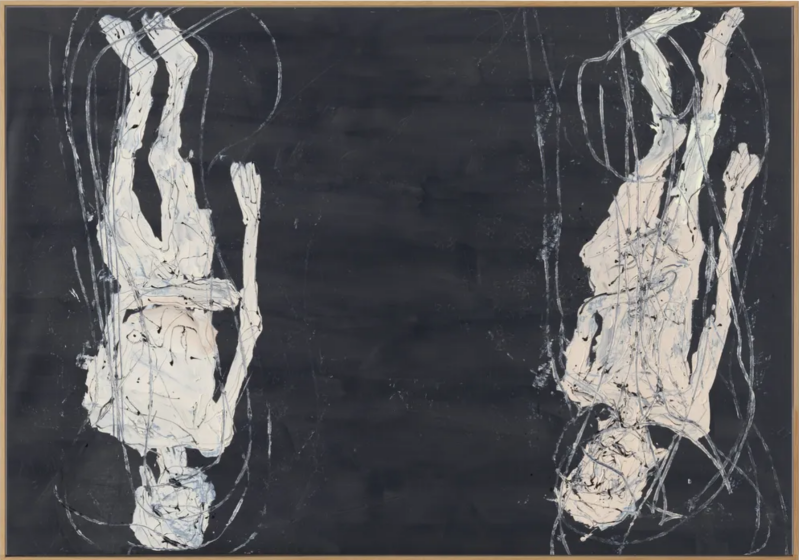
Indigene liegen im Farnkraut 2025

Stravinsky 2026